
Whoa! I know that sounds dramatic.
But for anyone who’s held a seed phrase on a sticky note and sweated through a software update, this feels like relief. My instinct said there had to be a better way. Something felt off about carrying paper backups around like an ancient relic. Seriously?
Okay, so check this out—contactless cold storage blends two ideas that used to feel mutually exclusive: the convenience of tap-and-go, and the safety of true offline custody. At first glance they seem at odds. But actually—after a few late-night fiddles and some hardware trials—I started seeing the pattern. Initially I thought contactless meant compromise, though then I realized it can mean fewer attack surfaces if done right.
Short version: a physical smart card that stores keys without ever exposing them to a connected computer can be a game-changer. Hmm… that’s not just hype. It’s practical. And weirdly comforting.
Here’s what bugs me about most mainstream wallets today. They brag about UX and instant swaps. They promise zero fees. But their private keys often live in memory while the OS is in charge. That part keeps me up. My gut kept telling me: there are too many moving parts. So I started testing different smart-card solutions, from chip-based NFC cards to more elaborate multi-chip devices. I learned tricks the hard way.
How contactless cold storage actually reduces risk
First: by definition, cold storage separates keys from the internet. Short sentence. Second: when the private key never leaves the secure element on the card, there is no keyboard logger or remote exploit that can directly drain funds. Third: contactless interfaces (NFC) act as a simple bridge for signed transactions, not a conduit for raw keys.
Sounds neat. But it’s not magic. There are trade-offs. On one hand, you remove the OS attack vector. On the other, you add physical attack considerations and supply-chain worries. On the other hand, a well-designed tamper-evident card and a verified manufacturing chain make physical compromise harder, though actually obtaining that assurance is nontrivial.
I’ll be honest: I still keep a paper backup. I’m biased, but redundancy matters. I tried relying solely on one device once and that backfired. Double mistakes taught me more than any tutorial.
One practical advantage I appreciate: contactless cards often make signing transactions feel fast and human. You tap your phone. The card lights or vibrates. The transaction is authorized. No fumbling for cables. No drivers. That micro-interaction reduces user error, which is a huge point of failure in crypto.
But wait—let me rephrase that. Fast UX is only meaningful if the security model is sound. So when evaluating cards, prioritize these things: certified secure element (common criteria/CC), open or auditable firmware, and a clear, minimal signing protocol. If any vendor tries to dazzle you with extra features at the expense of transparency, be wary.
Real-world trade-offs: what to watch for
Short sentence. Look for these practical issues.
Supply chain trust. If the card ships from an untrusted origin, there’s room for interception. So buying from authorized resellers matters. I once found a suspiciously altered box on a marketplace—somethin’ that screamed “red flag.”
Firmware updates. Some devices insist on over-the-air updates to patch critical bugs. Updates are important. But they also widen the threat model if the update mechanism is opaque. Ideally, the card supports offline signing forever, and firmware updates are optional and verifiable.
User recovery. If a card dies, how do you recover access? If your recovery is a mnemonic, are you comfortable writing it down? Many users prefer a fallback like a printed QR or a second card in a safe deposit box. There is no single perfect approach.
Another nuance: many contactless cards use a companion mobile app. The app is often the bridge that builds the unsigned transaction and sends it to the card. That app can be mobile malware-prone. So the best designs keep the app thin, with minimal privileges, and use standardized, inspectable protocols. I tested a few apps. Some were refreshingly simple. Some were very very troubling—too many permissions, too chatty.
Here’s a pro tip from doing bench tests: isolate your signing phone. A cheap burner phone set up only for wallet interactions reduces risk substantially. It sounds extreme, yet it works. It’s old-school compartmentalization. Old habits die hard, but some of them are worth keeping.
A few hands-on comparisons
Contactless cards vs metal seed backups. Metal is resilient to fire and water. Cards are resilient to remote exploits. Both protect you from different threats. You need both in many cases.
Contactless cards vs hardware wallets with cables. Wired devices sometimes require desktop drivers, which increase the attack surface. NFC cards rarely require that. Less baggage is simpler. But wired devices can be easier to integrate with desktop dApps, so pros may prefer them for trading frequency.
Contactless cards vs custodial solutions. Custodial platforms are convenient, but they always carry counterparty risk. If you value sovereignty, noncustodial cards let you tap into contactless payments without giving up control.
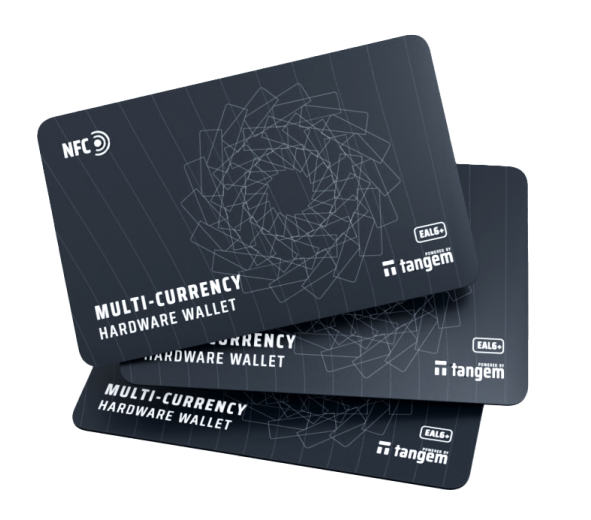
Check this out—if you want to try a widely discussed option, this tangem hardware wallet is an example of how smart card design can be combined with contactless ease. The product’s approach emphasizes immutable keys in a secure element, and their cards are designed for simple offline signing workflows. I’m not endorsing every claim, but it’s a clear reference point that illustrates the category.
Common questions from people I talk to
Is NFC secure enough for big amounts?
Short answer: yes, when the key never leaves the secure element. Long answer: physical attacks (chip extraction) are possible but expensive and targeted. For most holders, the threat landscape is dominated by remote phishing, malware, and human error—not a criminal going after your single card. So for many, it’s an appropriate layer of defense.
What if the card fails?
Have a recovery plan. Multiple cards, written seed, or a multisig setup. Multisig across different device types is a high-safety option. I used a two-of-three scheme for a while; it felt like insurance.
Can contactless be used for payments?
Yes. Some solutions are designed for in-store or P2P contactless payments, though adoption is still growing. Regulatory and merchant integration are the main bottlenecks, not the tech itself. Expect better interoperability as standards mature.
So where does that leave us? I’m curious, skeptical, and cautiously optimistic all at once. My feelings shifted as I learned more. At first I wanted simplicity. Then I realized simplicity without transparency is dangerous. Now I want both. Practical, audited contactless cold storage gives me that balance in many scenarios.
I’ll wrap with a thought: security is less about perfection and more about margin. Margin against mistakes. Margin against surprise. A contactless smart card can add that margin without turning your life into a fortress. That, to me, is the point.
Something to chew on. I’m not 100% sure about everything here. But I keep testing. And you should too—carefully, and with backup plans.